
Integrated energy and industrial systems
Integrated energy research begins where separate component models stop: at the interfaces among electricity, hydrogen, thermal processes, storage, markets, industrial production, and the operators responsible for coordinating them.
Research scope
I study the coordinated design and operation of renewable and industrial energy systems across electricity, hydrogen, gas, and thermal domains. The work connects infrastructure configuration with storage, conversion, demand, markets, operating modes, and industrial decarbonization.
Research objectives
The objective is to develop modular modelling and control frameworks that preserve each subsystem’s physical meaning while identifying feasible operating domains, co-optimizing coupled resources, and supporting reliable and lower-carbon infrastructure decisions.
System architecture
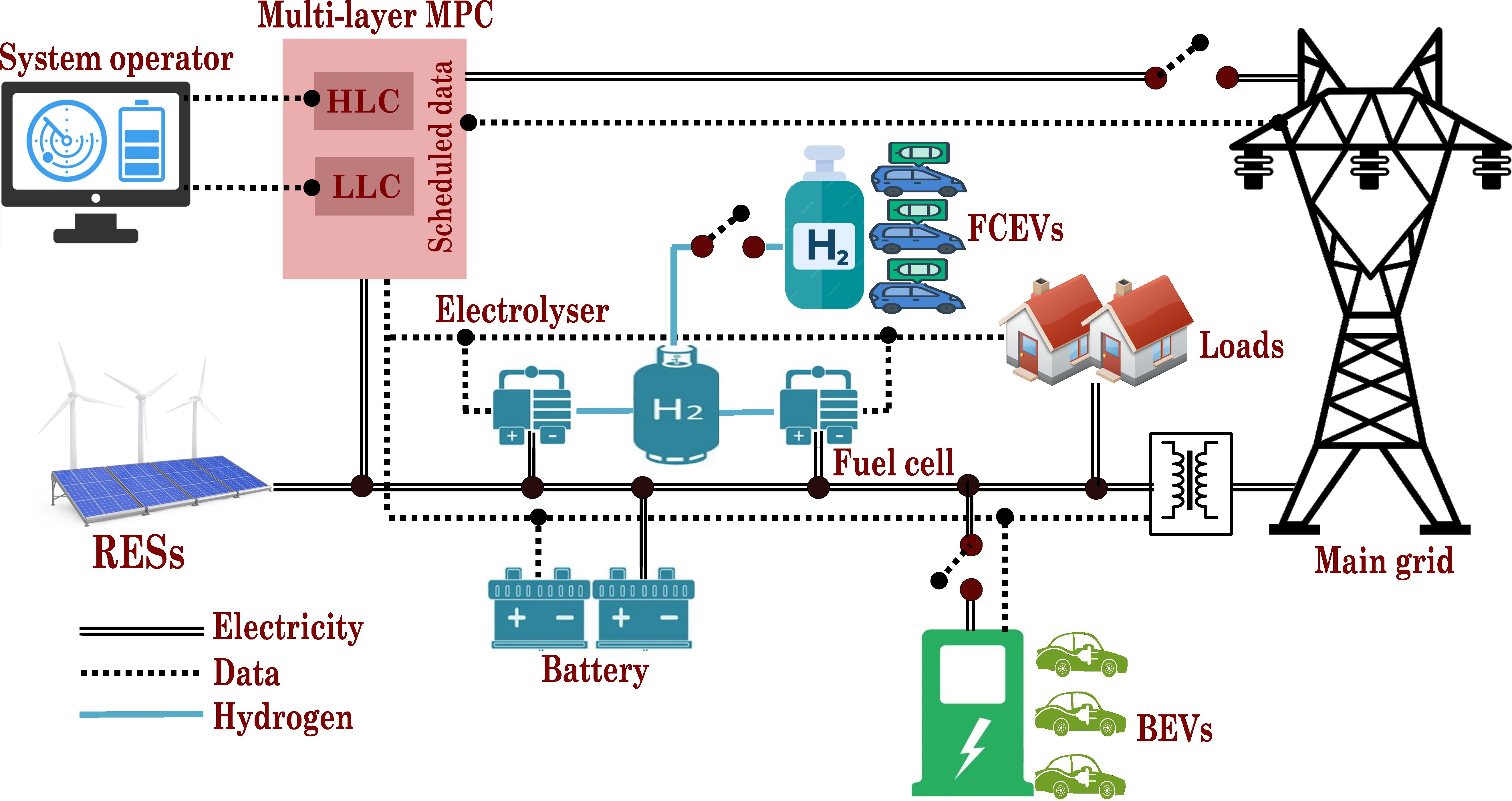
The system architecture coordinates renewable availability, conversion efficiency, storage limits, industrial demand, market exchange, and operating modes within one decision framework while retaining the physical role of each subsystem.
Industrial validation
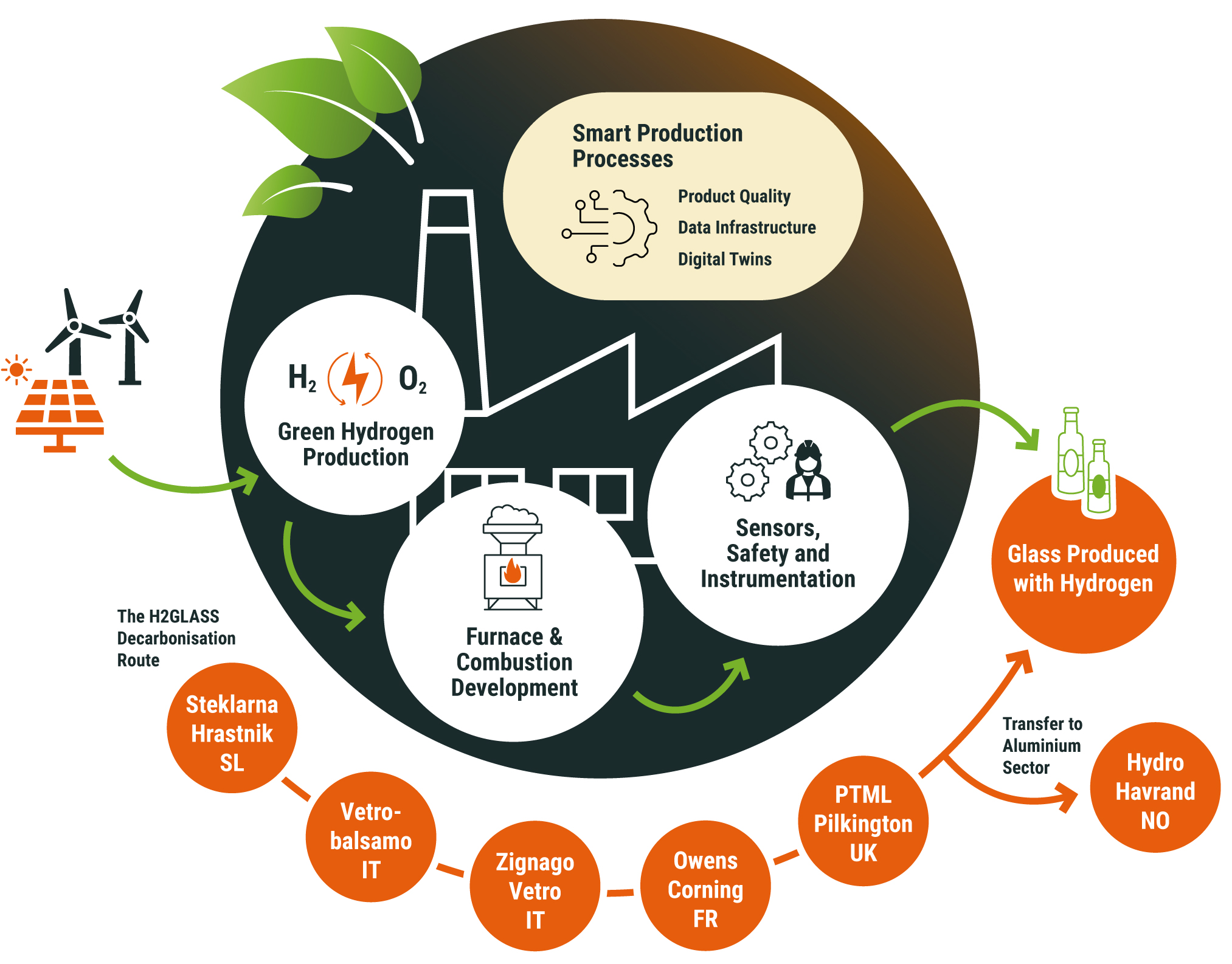
H2GLASS extends energy-system analysis to furnace behaviour, product quality, sensing, digital twins, maintenance, safety, and plant-specific operation, with validation in glass and aluminium demonstrators.
Field implementation
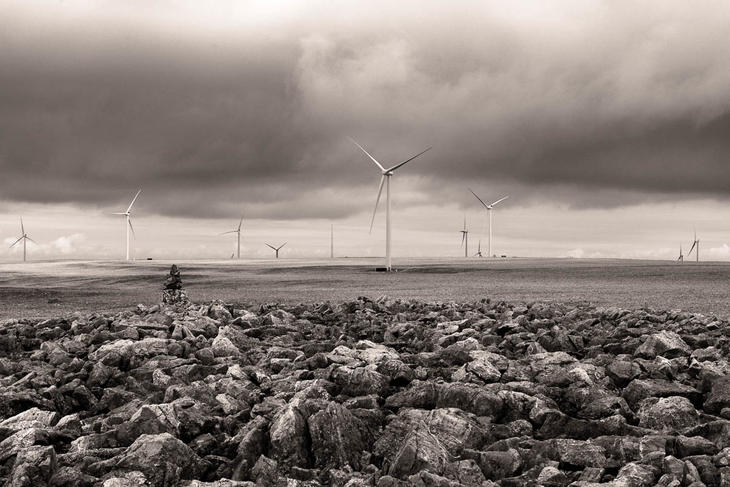
HAEOLUS implements dynamic modelling, mode-specific control, and market-aware operation for electricity storage, mini-grid operation, and fuel production at a wind-powered hydrogen site in northern Norway.
Selected publications
2026 · IEEE Transactions on Industry Applications
A novel stochastic optimal control for dispatchable energy storage in integrated multi-vector energy systems
Publisher (opens in a new tab)2026 · Renewable and Sustainable Energy Reviews
Hydrogen energy systems for decarbonizing smart cities and industrial applications: a review
Publisher (opens in a new tab)2025 · Journal of Cleaner Production
Advanced relaxed stochastic control for green energy management and decarbonization in large-scale heterogeneous industrial clusters
Publisher (opens in a new tab)2025 · IECON 2025 — 51st Annual Conference of the IEEE Industrial Electronics Society
Coordinated optimal control of dispatchable energy storage systems in integrated energy hubs
Publisher (opens in a new tab)2024 · Energy
Integration of cascaded coordinated rolling horizon control for output power smoothing in islanded wind–solar microgrid with multiple hydrogen storage tanks
Publisher (opens in a new tab)2023 · IEEE Transactions on Automation Science and Engineering
A unified control platform and architecture for the integration of wind-hydrogen systems into the grid
Publisher (opens in a new tab)
Related projects
Industrial hydrogen project
H2GLASS
Hydrogen-ready production, sensing, digital twins, and industrial validation connect system modelling with glass and aluminium decarbonization.
ViewEuropean wind-hydrogen project
HAEOLUS
Dynamic modelling and control were developed for electricity-storage, mini-grid, and fuel-production operating modes at a wind-powered hydrogen plant.
ViewCurrent funded project
Autonomous renewable-hydrogen microgrids for Arctic communities
The integrated framework extends to isolated polar systems through electrical-hydrogen-thermal digital twins, sizing, resilience, and supervisory control.
View
Research opportunities
Research enquiries may focus on multi-vector modelling, renewable-hydrogen microgrids, industrial decarbonization, digital twins, resilience, or system-level optimization. Availability and supervision capacity are discussed directly.